

10 min
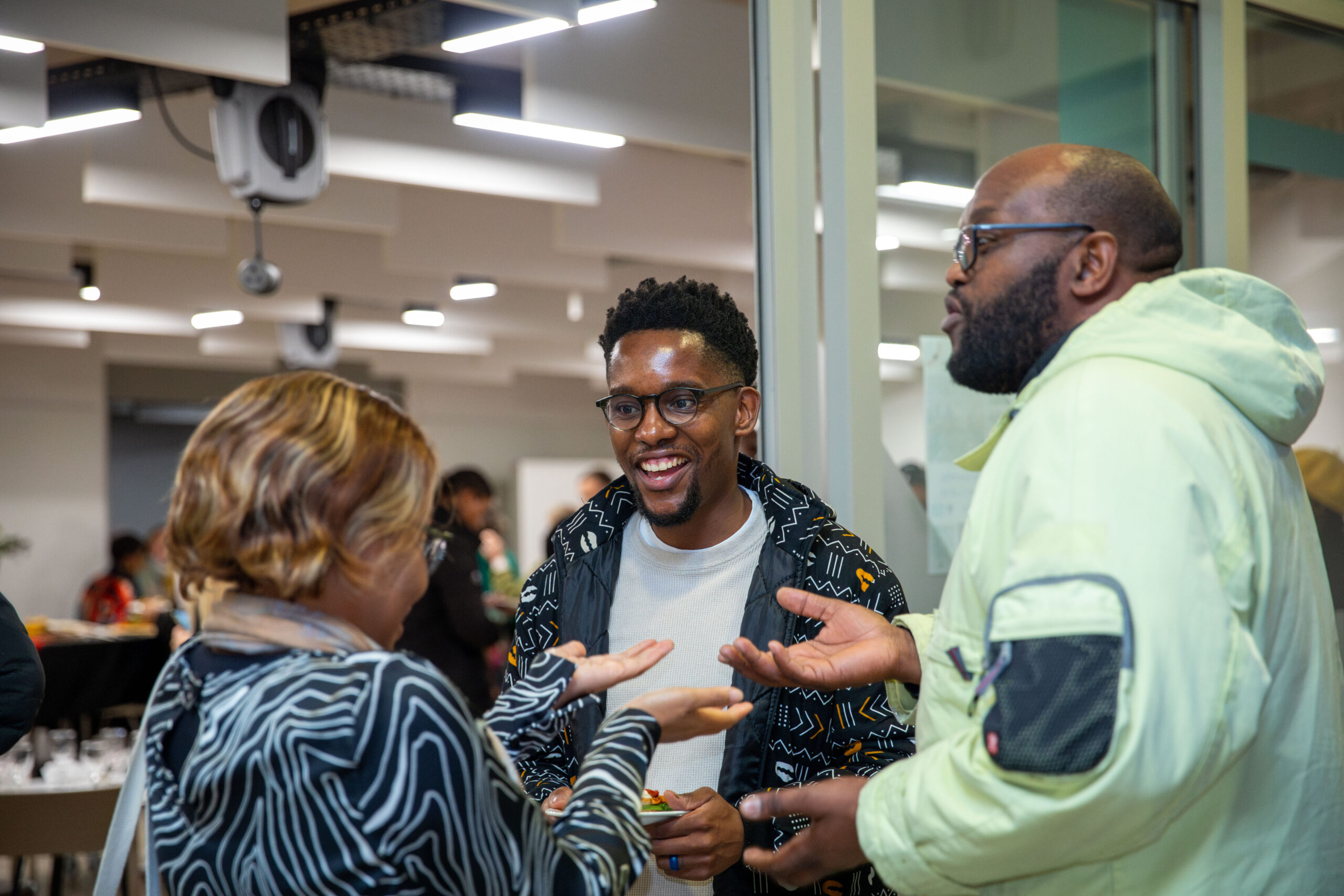
Collaboration in action - where diverse voices come together to reframe challenges and spark new ideas.
So, it makes sense that sharing stories is one of the most powerful parts of design thinking. When we tell the stories of how we approached a challenge, what worked, and what didn’t. Through this, we go beyond reflection and begin to inspire. We remind others that creative problem-solving isn’t a straight line. It’s messy, collaborative, and profoundly human.
But do we still make time for sharing these stories?
Whether you’re a student or a professional, chances are you’ve felt the pressure. Deadlines pile up, inboxes overflow, and time becomes the scarcest resource of all. The first thing we sacrifice in this rush? Talking.Just talking. Sharing ideas, bouncing thoughts around, pausing to ask “What if…?”or “How might we…?”
It feels trivial, doesn’t it? But it’s not. When we skip these moments of connection, we lose the power of iteration, that slow essential refining of ideas through discussion and reflection. The result is a world full of “first-draft” ideas: underdeveloped solutions that never got the chance to grow through collaboration.
Design Thinking reminds us that innovation thrives on collaboration. Multi-disciplinary input helps us look beyond our own blind spots. It shifts problem-solving from an individual act to a communal journey where the impact ripples far beyond the original thinker. When we create things together, we create a shared solution.
The second part of design thinking, and the one that often gets overlooked, is space. Creative problem-solving needs freedom. Not just physical space, but mental and emotional space too. Because ideas built within rigid constraints often stay trapped there.
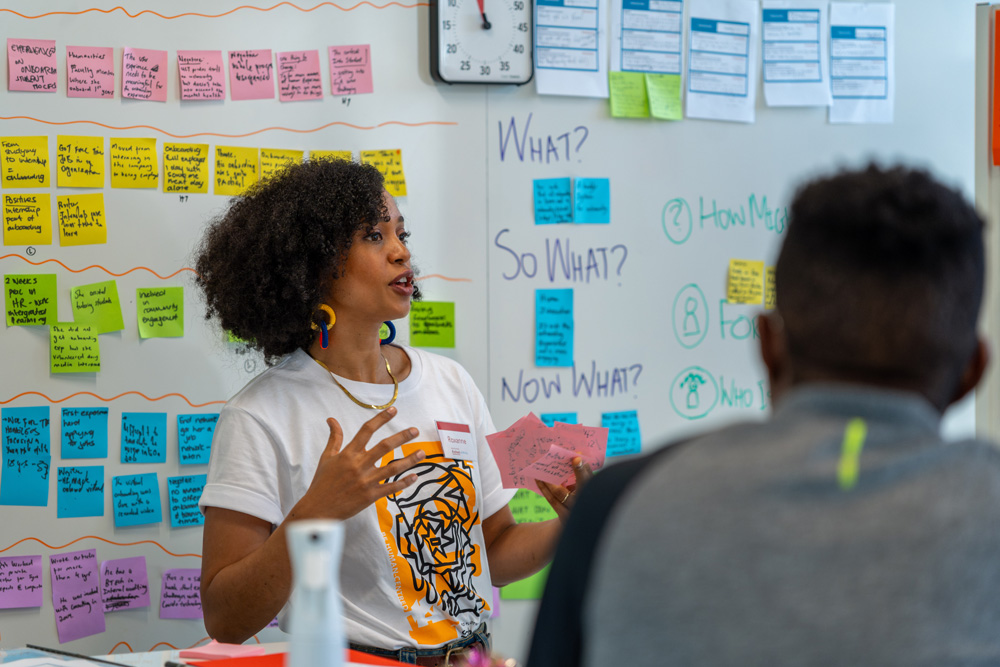
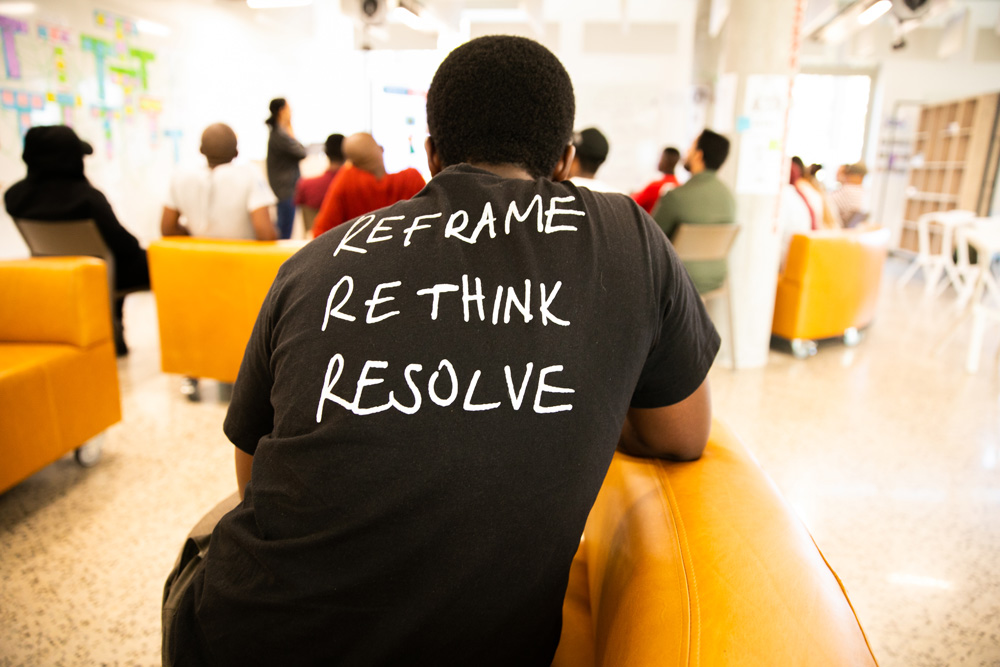
At d-school Afrika, we’ve seen how important this sense of openness is. A single conversation over coffee can spark a breakthrough. A shared whiteboard can become a space where empathy meets experimentation. It’s why our workshops and programmes are designed not just to teach, but to connect, to create the conditions where collaboration feels natural, not forced, and where the advantages of creative thinking come alive.
d-school’s studios are designed as learning ecosystems where ideas are visible and experimentation is encouraged. The result is a space in which ideas get to grow into creative solutions through iterative collaboration.
Every design story is a reminder that great ideas aren’t born perfect; they’re shaped through iteration. It’s a constant cycle of testing, prototyping, breaking, and rebuilding. This process takes patience.
Design thinking invites us to slow down just enough to learn, to reflect on what’s working, and to stay curious when it’s not.
When we hear how others navigated this cycle, from the setbacks to the breakthroughs to the surprises, it normalises the messiness of creation. When we collaborate with project partners and consider how we can realise their objectives as well as our own, it teaches us that iteration isn’t failure; it’s progress made visible.
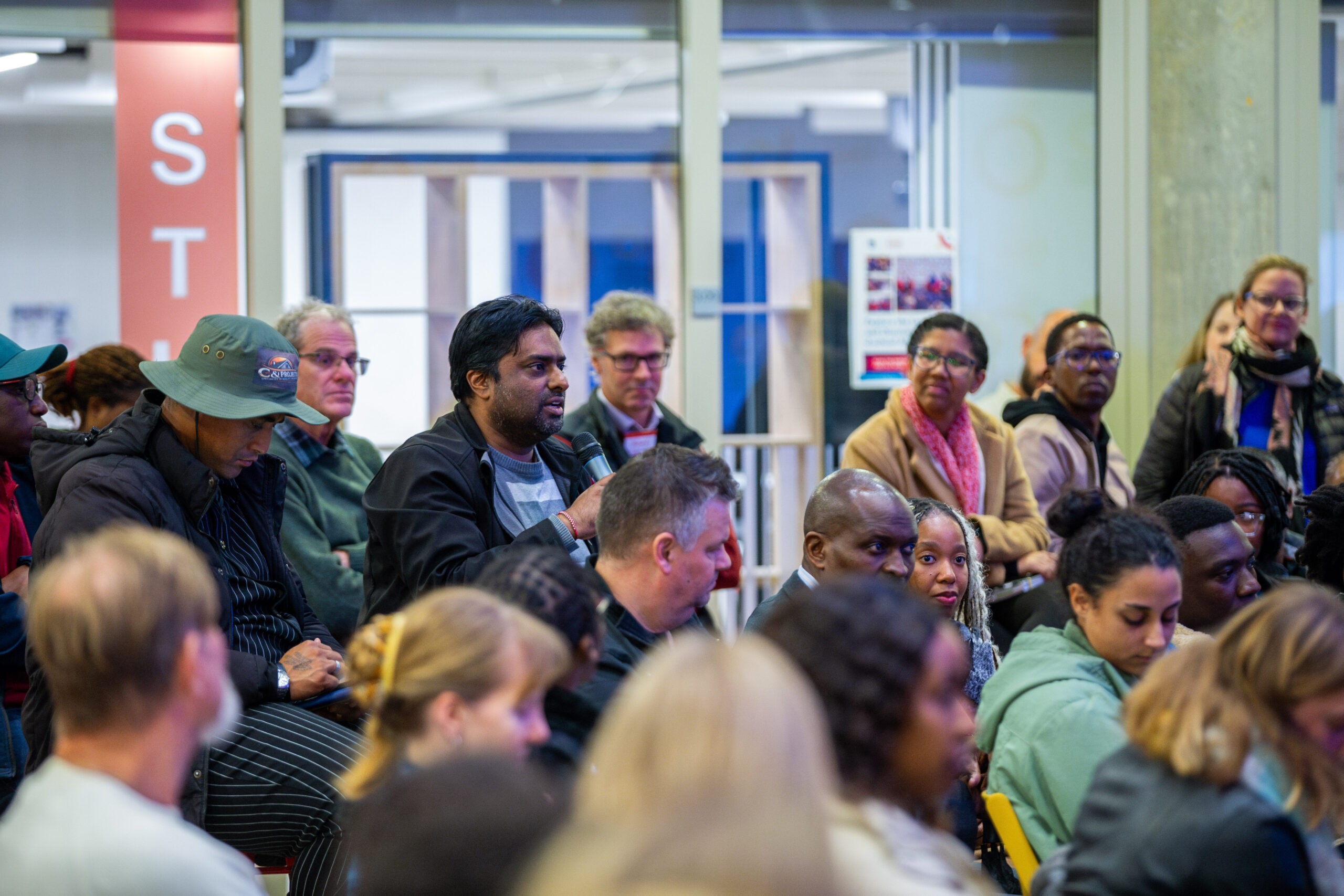

There are many ways to nurture these stories, both in person and online.
At d-school Afrika, creative problem-solving thrives in shared spaces that make learning visible:
Each story told, whether in a classroom, a studio, or an online forum, becomes part of a collective archive of insight. It shows how design thinking lives and breathes through people, not just projects.

Sometimes, seeing someone else’s journey is all it takes to believe in your own. We see ourselves mirrored in others’ courage to experiment, in their failures and triumphs.
In celebrating design thinking stories, we celebrate the courage to share. The willingness to say: This is what I tried. This is what I learned. Here’s what changed because of it.
And that’s how design thinking continues to evolve. Not through isolated brilliance, but through collective reflection. Because when one person’s story sparks another’s imagination, the cycle of creative problem-solving starts anew.

Copyright 2025 Hasso Plattner d-school Afrika*