

10 mins
And somewhere in the middle, the real problem remains hidden, misunderstood, or simply unseen.
This is where the impact of design thinking becomes most visible. Not as a method that guarantees answers, but as one that fundamentally changes how teams see. It shifts perspectives. It surfaces what's been overlooked. And it transforms challenges from obstacles into opportunities for meaningful innovation.
One of the most powerful aspects of design thinking is how it redirects attention. Traditional problem solving techniques in business often start with the solution: what can we build, what systems can we implement, what processes can we optimise? Design thinking starts somewhere else entirely, with the people affected by the problem.
When teams begin with empathy, immersing themselves in the experiences and aspirations of the people they're designing for, they start to see things they'd previously walked right past. A customer complaint becomes a window into unmet needs. An internal inefficiency reveals a gap in communication. A routine task exposes an opportunity for reinvention.
The design thinking process makes this intentional. It creates space for teams to slow down and observe, to ask questions without immediately proposing solutions, to listen deeply before they act. This is what separates it from other approaches to creative problem solving. It doesn't assume we already know what matters. It asks us to find out.
Design thinking thrives on diversity of perspective. When teams from different disciplines and experiences come together, they bring different ways of seeing the same challenge. What looks like a technical issue to one person might appear as a communication breakdown to another.
This multiplicity is essential. Wicked problems (complex challenges without a single, clear solution) are rarely confined to a single domain, and solutions that emerge from a single perspective often fail to account for the full ecosystem they'll inhabit. The result is solutions that are more robust, more human, and more likely to succeed.
Leading design school institutes like the Royal College of Art and Stanford d.school have championed design thinking as a core methodology precisely because of this fact: the most meaningful breakthroughs happen when critical thinking skills are applied collaboratively, across disciplines, with openness to perspectives that challenge our assumptions.
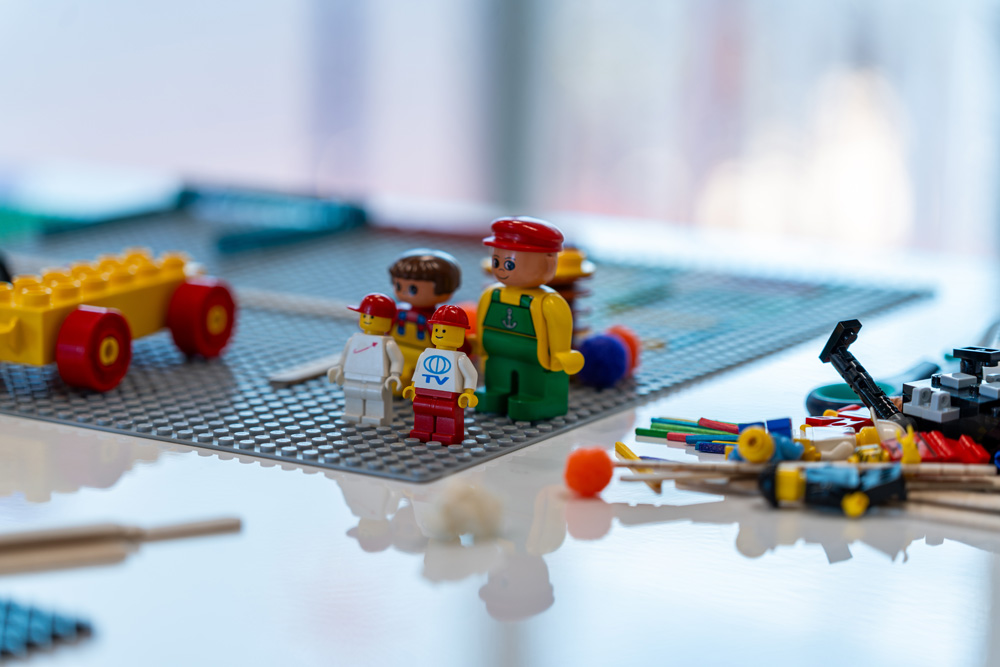
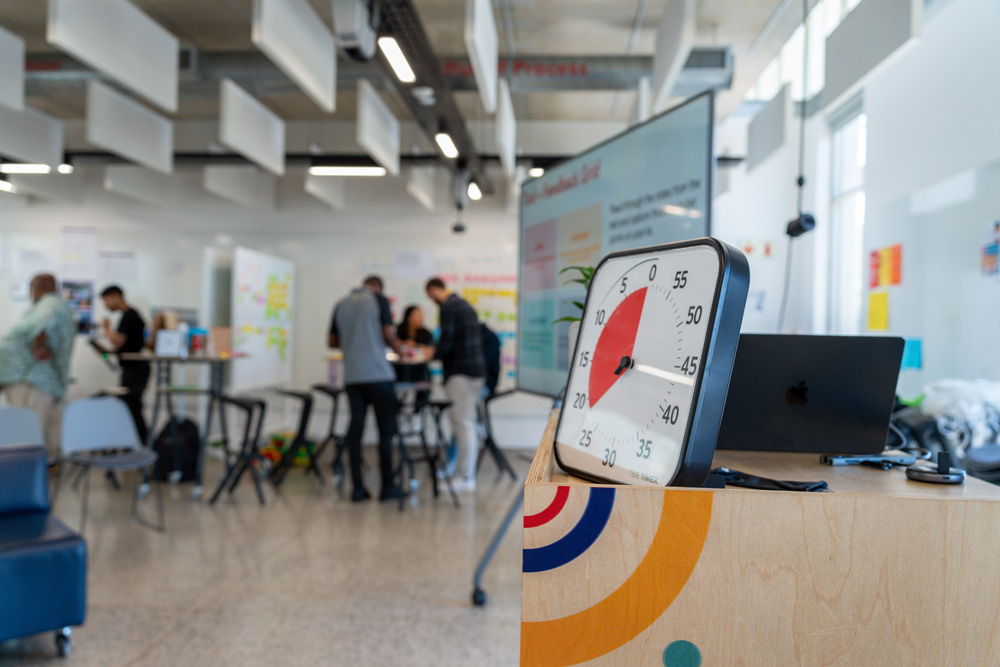
Participants collaborating and visualising ideas as part of the design thinking process.

The impact of design thinking becomes clearest when we look at how it's been applied in real contexts. Within the Afrikan Design Thinking Network, practitioners are using design thinking to tackle locally relevant challenges.
One such example is reimagining how informal traders access financial services. By spending time with traders and understanding their relationship with money and trust, our sessions have helped teams uncover insights traditional research missed. Because here the solution is designed around lived realities.
Beyond our network, Design for Good has shown how design thinking can be applied to social challenges, from improving public services to creating more equitable systems. It’s work that reminds us that design thinking isn't just a business tool, it's a way of approaching pressing issues with creativity, empathy, and commitment to human dignity.
Explore more examples through Alumni Stories and the latest design thinking News.

One of the lasting impacts of design thinking is what it does to the people who practice it. When teams go through the design thinking process, they develop critical thinking skills that extend far beyond the specific project. They learn to observe more carefully, listen more deeply, question assumptions, collaborate across differences, and experiment without fear of failure.
These capabilities are essential for navigating an increasingly complex world. They transform how people work, how they lead, and how they contribute to their organisations. This is why we've designed our Design Thinking in Practice programme as an immersive, hands-on experience where participants work on real challenges and leave with a new way of seeing
When you take a step back and see it all from a holistic angle, the true impact extends beyond individual projects.
When people begin to see differently, they start to work differently. And when they work differently, entire organisations shift. A single team returns with new energy and ideas. That energy spreads. Before long, the entire culture becomes more open, more curious, more human-centred.
This is perhaps the most profound impact: design thinking doesn't just change what we create, it changes who we become. It transforms how we relate to challenges, to each other, and to the possibilities that exist when we're willing to see the world through someone else's eyes.
Design thinking invites us to approach challenges with curiosity instead of certainty. To value human experience as much as technical expertise. To create solutions that serve real needs. And to build organisations where creative problem solving isn't the exception, it's the norm.
If you're curious about how design thinking might change the way your team sees and solves challenges, explore our library of design thinking stories resources, or join us for an immersive experience through one of our professional programmes.
Because the impact of design thinking begins with seeing what you've been missing all along.

Copyright 2025 Hasso Plattner d-school Afrika*