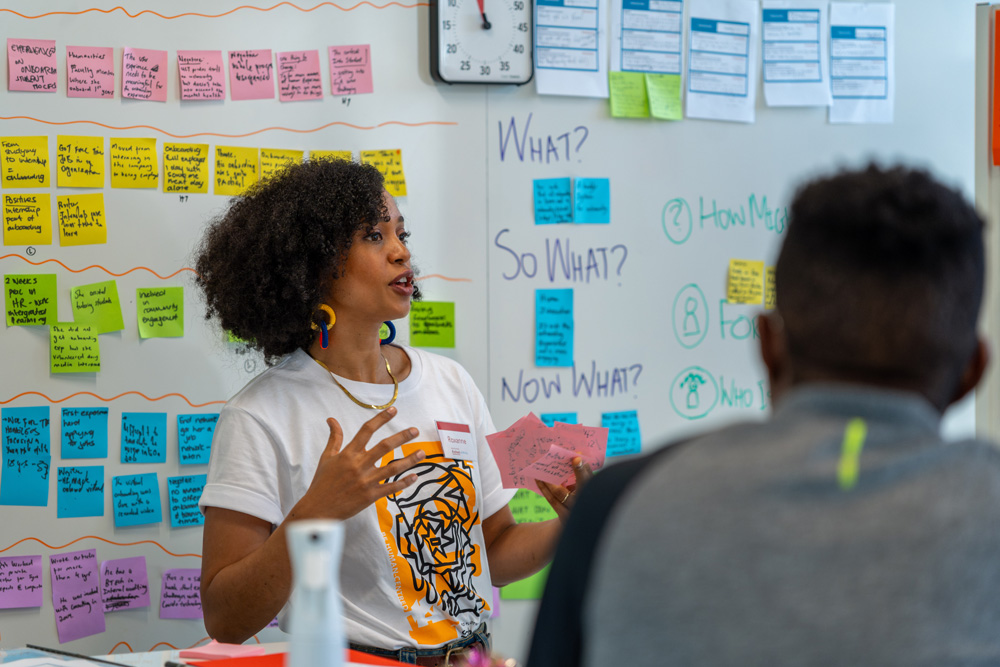


10 mins
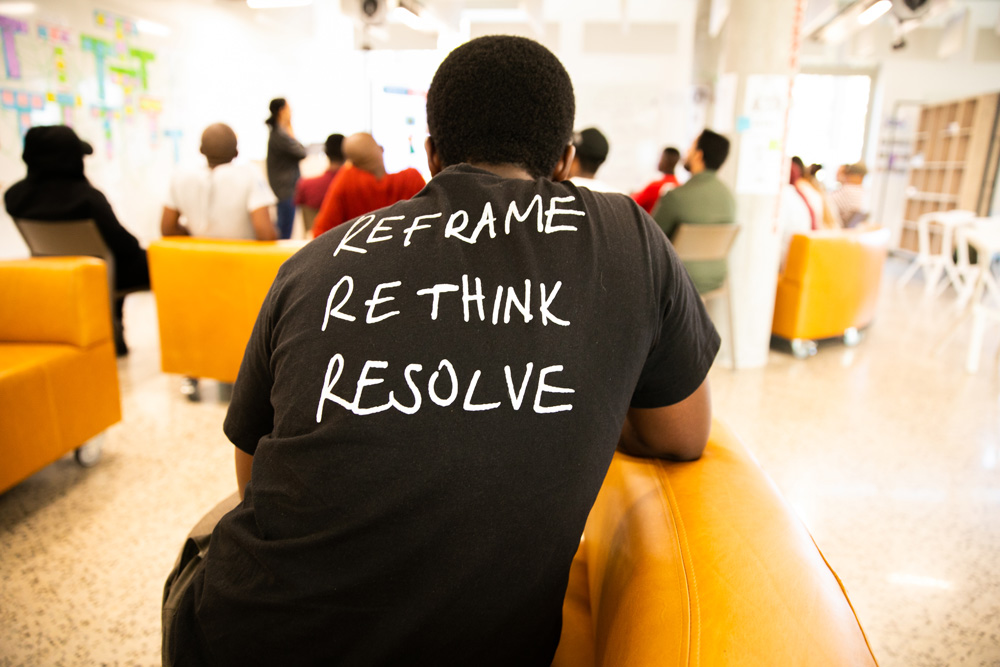
A moment of creative confidence in action as participants reflect, learn, and collaborate during Design Thinking Week.
But while modern workflows have made timeboxing a vital part of everyday deliverables, it’s also shown us just how important creativity and collaboration is in professional environments.
At the Hasso Plattner d-school Afrika at UCT, we believe this is precisely where design thinking thrives. As a creative problem-solving approach grounded in empathy and experimentation, design thinking equips professionals with the critical thinking skills and problem-solving techniques in business and organisations that are needed to navigate uncertainty, collaborate across disciplines, and create lasting impact.
For decades, business success was defined by efficiency, by how well teams could follow systems and deliver predictable results. But today’s challenges are no longer predictable. Complex issues like digital transformation, sustainability, and employee well-being require a different approach: one that begins with understanding people and their lived experiences.
This is where the design thinking process begins: with empathy. By immersing ourselves in the needs and perspectives of users, colleagues, and customers, we begin to uncover what really matters. From there, we define problems more precisely, generate bold ideas, and test them in real-world contexts.
This cycle of discovery and iteration cultivates a mindset shift. Teams move from asking, “What can we build?” to “What do people truly need?” In the process, workplaces evolve into living systems of learning, collaboration, and creativity.
Design thinking is about seeing creative thinking and problem solving from a new perspective. It’s about being curious, courageous, and collaborative. It challenges the status quo and empowers people to take ownership of innovation. In a world where many professionals feel constrained by rigid processes or fear of failure, design thinking fosters what we call creative confidence: the belief that everyone can contribute meaningfully to solving complex problems.
When applied in professional contexts, this approach can transform not just products or services but entire work cultures. For example, cross-functional teams that once worked in silos start co-creating solutions. Leaders begin to value experimentation as much as execution.
Employees rediscover purpose and engagement as their ideas translate into tangible change.
The result? More resilient organisations and more fulfilled people.
Beyond its human impact, design thinking delivers measurable business value. Companies that embed it into their strategy improve collaboration and decision-making, which leads to more innovative outcomes. By adopting creative problem solving as part of their culture, these organisations gain a powerful edge in attracting talent and responding to change.
But design thinking is not a one-size-fits-all formula. It’s a flexible framework that adapts to the unique challenges of each team or organisation. Whether used to design customer experiences, reshape internal processes, or reimagine workplace culture, its principles, empathy, experimentation, and collaboration, remain universal.
Design thinking gives structure to imagination and turns curiosity into capability.
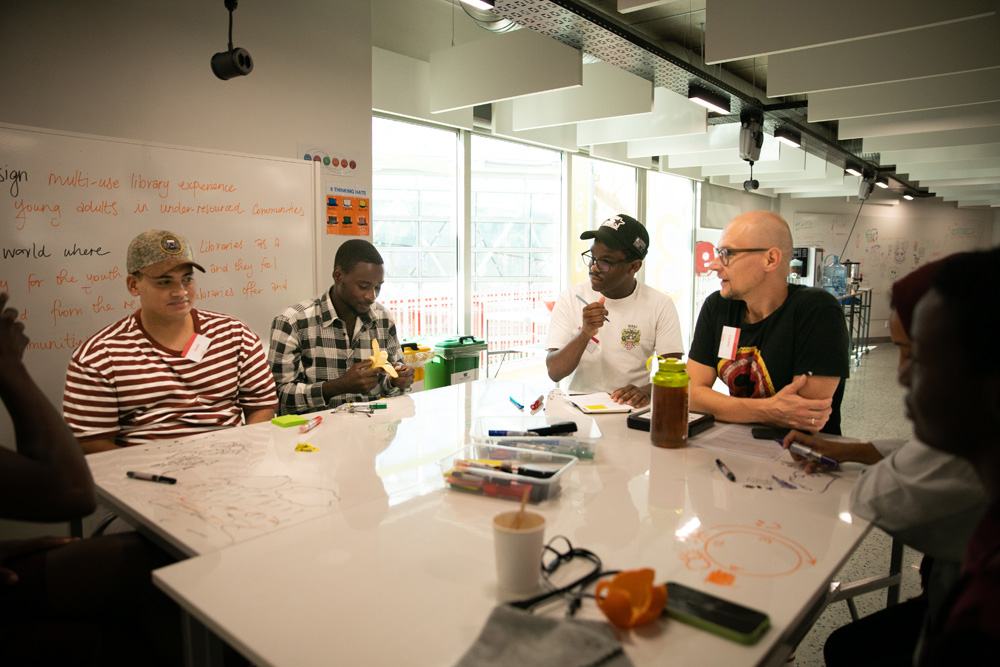

Ready to bring these principles to life in your own work? The Hasso Plattner d-school Afrika offers a range of Professional Programmes tailored to different levels of experience and organisational needs:
Each programme focuses on developing critical thinking, collaboration, and creative problem solving, all skills that help professionals adapt and lead in today’s dynamic work environments.

As technology evolves and work becomes increasingly complex, human creativity remains our greatest asset. The future of work will belong to those who can ask better questions, challenge assumptions, and collaborate across disciplines to design meaningful change.
At d-school Afrika, we see design thinking not as a trend, but as a transformative process, one that empowers individuals and organisations to thrive in the face of complexity.
Whether you’re redesigning a service, reimagining your team’s collaboration, or rethinking your company’s strategy, the journey begins the same way: with empathy, curiosity, and a willingness to explore what’s possible.

Copyright 2025 Hasso Plattner d-school Afrika*