

10 minutes

Photo: Time to move. Use time-boxing to stop circular office debates and start the rippling effect of decisive action.
And that’s why we’re here to do a bit of mythbusting.
Because design thinking is a mindset that’s made for everyone. What’s more, it's one that anyone can develop, whether you're a student figuring out your next steps, an entrepreneur building something new, a professional navigating workplace challenges … or simply someone curious about better ways to solve problems.
At its core, design thinking is about human-centred problem-solving. It's a way of approaching challenges that starts with empathy, thrives on collaboration, and values experimentation over perfection. These aren't critical thinking skills exclusive to any one industry or discipline. They're transferable, adaptable, and deeply relevant to how we navigate everyday life.
Think about Netflix. When the company realised DVDs were becoming outdated, it didn't cling to what had worked before. It listened to what people needed, observed how they were consuming content, and created an on-demand streaming service that transformed an entire industry.
These types of decisions are rooted in a design-led mindset and creative problem-solving; a curiosity about people's experiences, willingness to experiment, and courage to iterate based on what they learned.
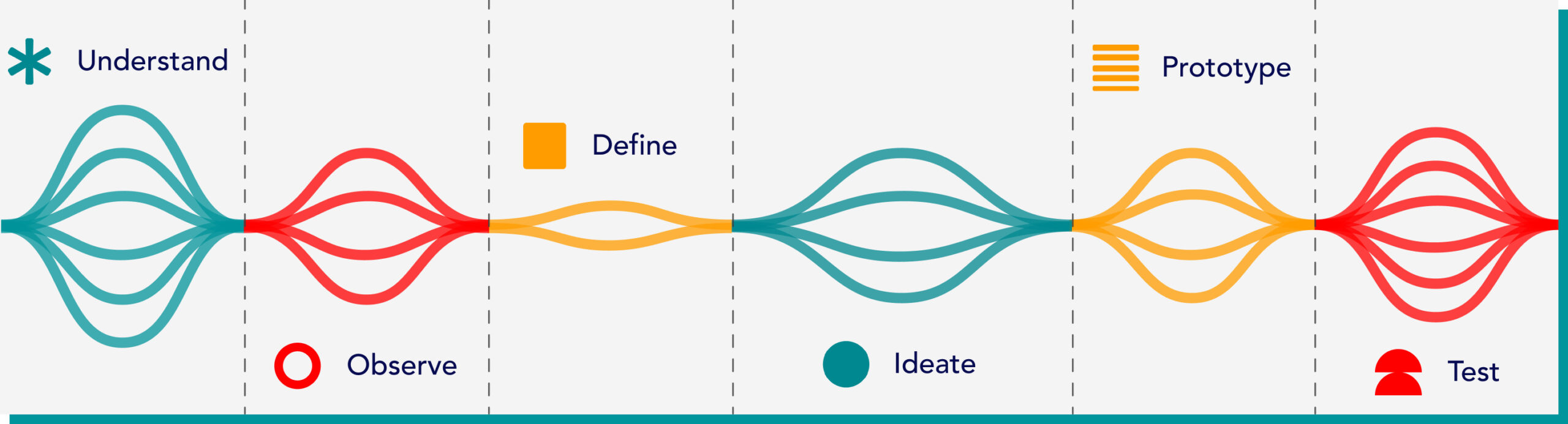
The beauty of design thinking is that it works just as well for personal challenges as it does for professional ones. The design thinking process follows six stages: Understand, Observe, Define, Ideate, Prototype, and Test. And while those might sound formal, they're remarkably intuitive when applied to real life.
When you apply design thinking to your own life, you become both the designer and the user. And that's where things get interesting.
There's a line that captures this perfectly: "Can't see the forest for the trees." When we're too close to a problem, when we're living inside it every day, it becomes difficult to define what we actually need to solve.
In professional contexts, design thinking helps teams focus on one pain point, one aspect at a time. But when you're your own client, it's easy to lose focus and let your thoughts spiral. That's where the structure of design thinking becomes invaluable. It forces you to stay focused on the problem at hand and solutions that address it directly.
And this is where collaboration matters. Working with others, people who bring different perspectives and aren't standing in the middle of your forest, helps you see what you've been missing. It's why design thinking is so often practiced in teams. Fresh eyes, different experiences, and diverse viewpoints transform how we understand challenges and imagine solutions.

If you're curious about experiencing design thinking firsthand, d-school Afrika offers two one-day programmes designed as accessible entry points for anyone aged 18–35. Both are hands-on, practical, and focused on building creative confidence through collaboration.
In a new series of practical, immersive learning experiences, we are introducing design-led mindsets to a wider audience than ever before. This series kicks off with The Everyday Designer: Applying design-led mindsets in your everyday life, a programme that uses intentional learning moments you can apply immediately in your everyday life.
You'll experience collaboration, creative confidence, and human-centredness through activities designed to gently shift how you think and act. The next session runs on 26 February 2026.
If you’re looking to kick off a more immersive journey, d-camp: Introduction to Design Thinking is a focused, hands-on introduction where you'll work in teams to tackle real challenges and experience design thinking in action. It's also the pathway into the Foundation Programme in Design Thinking, making it an essential first step for anyone wanting to go deeper.
Both programmes run monthly until May, offering regular opportunities to step into design-led thinking, working, and creating.

You don't need a design degree to think like a designer. You just need curiosity, a willingness to see challenges from new angles, and the courage to try something different.
Design thinking is a critical thinking mindset that crosses disciplines, industries, and contexts. It's as useful for navigating personal decisions as it is for solving challenges in companies. And it starts with a simple shift: approaching problems with empathy, collaboration, and an openness to learning through action.
If that sounds like something worth exploring, we'd love to welcome you to one of our one-day programmes. Because the best way to understand design thinking isn't by reading about it. It's by experiencing it.

Copyright 2026 Hasso Plattner d-school Afrika*